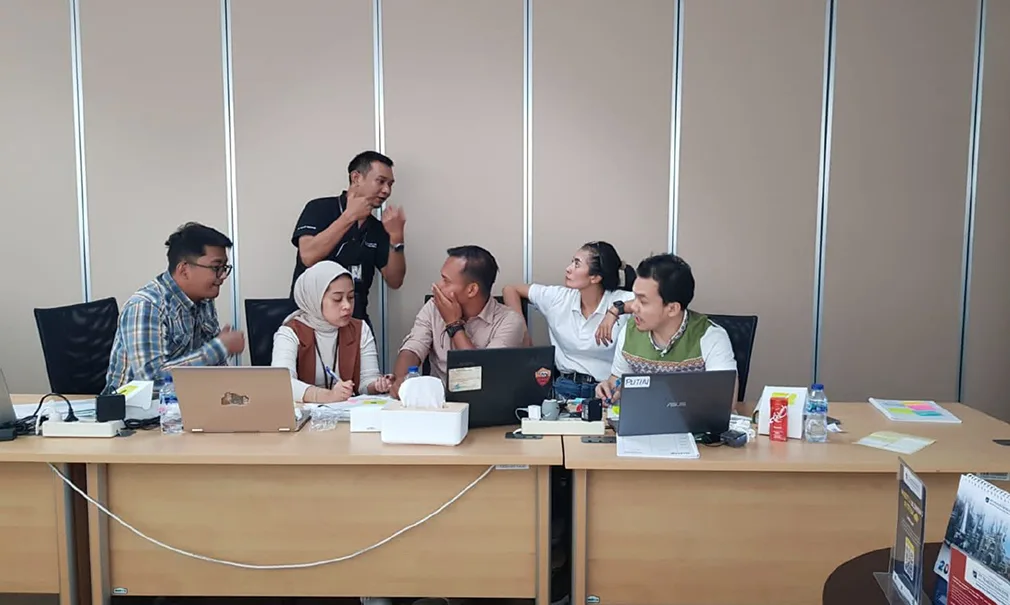
Building Win-Win Agreements that Drive Business Results
In increasingly complex organizations, negotiation skills are needed not only by sales and procurement teams, but also by leaders, support functions, and even individual contributors who interact with various stakeholders on a daily basis.
Negotiations take many forms: aligning priorities across teams, discussing terms with vendors, managing managers’ expectations, and resolving workplace conflicts. Without the right approach, negotiations often devolve into a tug-of-war of interests, leading to suboptimal decisions or unhealthy working relationships.
This program is designed to help participants understand that negotiation is not about winning or losing, but about creating solutions that deliver value to all parties. Using an Emotional Intelligence approach and the OMAH© Framework, participants learn to manage emotions, understand the interests behind positions, and build more strategic communication to reach agreements.
Participants will also be trained to handle high-pressure negotiation situations while remaining calm, structured, and solution-focused.
In an increasingly complex work environment, negotiation is not just needed by sales or procurement teams. Many roles within an organization—including leaders, support functions, project owners, and cross-functional teams—face situations daily that require the ability to align interests, manage differences, and reach productive agreements.
Often, the challenge in negotiation lies not in the courage to speak up, but in the ability to:
- understand the interests behind each party’s position
- maintain good relations despite differences
- clearly communicating needs without triggering resistance
- Achieving results that are not only quick but also sustainable
The Negotiation Skills program is designed to help participants develop a more strategic, calm, and collaborative approach to negotiation. Using the OMAH© Framework and Emotional Intelligence, participants learn that negotiation is not merely about winning an argument, but about building shared value while maintaining the organization’s business objectives.
Through this program, participants are guided to:
- Observe — understand the context of the negotiation, the interests of the parties involved, and the communication patterns that emerge
- Manage — manage emotions, pressure, and relationship dynamics during the negotiation process
- Act — applying techniques for asking questions, listening, articulating positions, and formulating solution options
- Happen — reaching a clearer, more realistic, and mutually beneficial agreement
This program is relevant for a wide range of organizational needs, from internal cross-functional negotiations and target discussions to coordination with vendors and interactions with external stakeholders.
Program Focus:
- Negotiation mindset: from win-lose to win-win
- Understanding the difference between position and interest
- Identifying stakeholders’ hidden needs
- Managing emotions in negotiation situations
- Using a structured negotiation approach (including BATNA)
- Reaching a clear and sustainable agreement

